Category Archives: Gardening Tips

Bog Plants- Bringing colour and texture to damp garden areas.

Bog planting

Bog planting

There are a whole host of wonderful plants that cope well with heavy soils and damp conditions and positively love having their ‘Feet Wet’. So give up on the waterlogged lawn or the muddy patch and let blog plants bring colour and texture to the damp areas of your garden. Here are a few to consider.

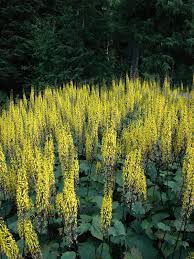
 Ligularia stenocephala 'The Rocket'

Ligularia stenocephala ‘The Rocket’

Ligularia stenoccphala ‘The Rocket’: A must for any bog planting, this plant has distinctive round leaves with serrated edges and tall dark stems reaching to 1/1.5m in height on which a succession of small bright yellow daisy flowers opening up the stem. Flowering in late summer giving a colour boast to the bog garden in late summer. Grow in full sun , but will tolerate a little shade. Grow in moist to damp soil.

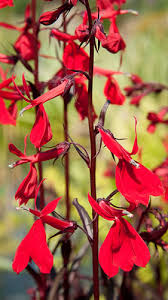
 Lobelia 'Dark Crusador'

Lobelia ‘Dark Crusador’

Lobelia ‘Dark Crusader’: This is a show stopper of a plant for the bog area. It has dark purple leaves and stems and tall spires up to 1m of individual dark marron red flowers from mid to late summer. Moist to damp soil, but not completely water logged. Sun to dappled shade. It is not completely hardy so in colder sites protect from frost. But it is worth it.

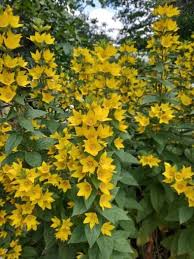
 Lysimachia puncata

Lysimachia puncata

Lysimachia punctara: This is a vigorous bog plant that makes great sweeps in a damp to wet area, so it may need to be kept in check. A tall plant up to 75cm with whorls of mid green leaves and butter yellow flowers grouped with the leaves from mid summer until the first frosts. Grow in full sun.

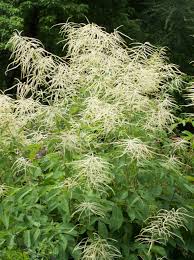
Aruncus dioicus 'Kneiffi'

Aruncus dioicus ‘Kneiffi’

Aruncus dioicus ‘Kneiffi’:A wonderful elegant plant for the edges of a boggy area, where the soil is damp but not water logged, It grows well in semi-shade. It has attractive finely cut leaves and then tall stems  up to 1m of white clouds of flowers are produced in mid to late summer.

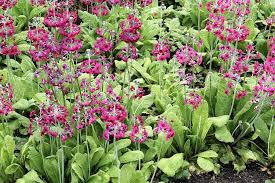
 Primula japonicia

Primula japonicia

Primula japonica: No bog planting would be complete with out an array of candelabra primula and Primula japonica dose not disappoint as the colours vary from white, to light pinks, shades of darker pink to purple. The plants produces a base clump of leaves and then in May and June the magic really begins with it’s flowers in ascending whorls in up to  5  or 6 tiers along the flowering stem. Reaching a height of 45cm tall. Plant on mass on the damp edges of the bog area in semi-shade and enjoy!

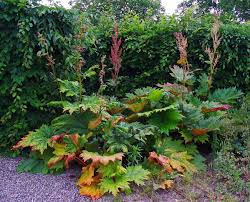
 Rheum palmatum

Rheum palmatum

Rheum palmatum: This ornamental member of the Rhubarb family adds jungle drama to the bog garden. It produces a Basel crown of huge 1m plus toothed edged leaves, with dark red under side. It also produces a 1.5/2m flower stem with small white flowers. But it is all about the foliage. It likes good moist/damp soil and must not dry out. In sun to semi-shade.

I hope I have inspired you to look again at that damp area in your garden and see it as potential rather than a problem, if you would like help to create a bog garden, possible even as part of a rain garden scheme then I know just the woman to help. Give me Emily a call to discuss all your garden design needs. Tel: Emily at Arcadia Garden Design  01273 470753.

Blousy Bulbs

 Double scented Narcissi

Double scented Narcissi

Bulbs are so much more than the usual suspects of daffs, tulips and crocus, here are some eye catching bulbs full of garden Wow factor.

 Fritillaria imperialis 'William Rex'

Fritillaria imperialis ‘William Rex’

Fritillaria imperialis ‘William Rex’: Know as crown imperial, this dramatic fritillaria grows up to 90cm high with a tufted of foliage at the top and its dark red bell flowers hanging beneath, flowering in March to April, grow in humus rich soil in full sun. A show stopper for any spring planting.

Hermodactyulus tuberesus

Hermodactyulus tuberesus

Hermodactyulus tuberosus: This unusual bulb, has a flower similar to a 3 petalled iris and it’s common name is the “ Widow Iris”. It has striking green flowers with with black lips.  a real talking point in any bulb collection. It is easy to grow in a sunny position and in most soils including chalk.

 Iris 'Red Ember'

Iris ‘Red Ember’

Iris ‘Red Ember’: This ‘Dutch Iris’ has smack you between the eyes colour appeal, none of that gentle yellow and soft blues of spring, but bright red with bronze tones and yellow splashes on the falls at 70cm tall it will be easy to spot. Grow in a sunny spot in good free draining soil. Flowers May into June.

 Ixia Venus

Ixia Venus

Ixia venus: Known as the African corn lilies, these bulbs make excellent cut flowers. They grow to 35 to 50cm. With open star like flowers multiple on each stem, this variety has eye popping dark wine red colour with a black centre. They need a sheltered sunny position or grow in pots under glass and put out after the last of the frost, grow in a light free draining sandy soil. Flowering June to July.

Lilium Friso

Lilium Friso

Lilium Friso: This is a giant at 1.50 to 1.80m tall, perfect for summer drama at the back of the boarder. With large trumpet flowers held in clusters at the top of the tall stems. White opening wide to show dusky yellow anthers full of scent and a deep magenta throat. Grow in full sun in a humus rich soil that does not water log.

‘Sadly there is no free from copyright image to illustrate this plant’

Mauscari latifoilia ‘Grape Ice’: The not so humble grape hyacinth, this variety has wow appeal. 15-20cm tall, with dark rich purple bells giving way to a crest of white bells at the top, this two tone beauty is worth a garden spot in the sun. Grow in a pot by the house to enjoy the spectacle in March and April. Well drained humus rich soil.

Narcissi Rip Van Winkle

Narcissi Rip Van Winkle

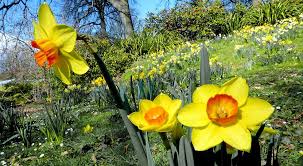
Narcissi ‘Rip Van Winkle’: When is a daff, just so much more? This dwarf variety at 15cm tall perfect for containers, rocky and bank planting, is a star turn. With golden yellow double flowers of pointy petals looking like an exploding firework. A real talking point and one for the bulb converser Grow in a sunny spot in humus rich well draining soil.

Blousy double tulips pack a punch in a vase.

Blousy double tulips pack a punch in a vase.

I hope I have wetted your appetite to get a little bit adventurous with your bulb selection ?


Go Wild!

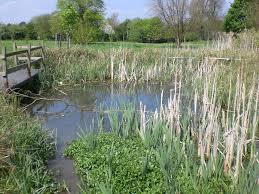
 wild life pond

wild life pond

It’s taken some gardeners a while, while others have been there all along, yes the garden is not yours or for your sole use, it is an ecosystem, to be cherished and most importantly nurtured. Here are a few ideas of how you can help to put the ‘Wild’ into your garden.

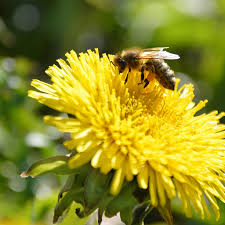
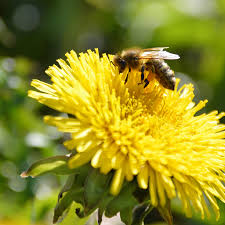
 Bee on Dandelion

Bee on Dandelion

The first thing is to embrace a bit of ‘untidy’ this will help to create a lot of different habitats in your garden. So a little less gardening and a bit more sitting in  your garden, what’s not to like!

 wildlife log pile

wildlife log pile

Log piles: Collect up those fallen branches and twigs, as many different sizes as possible, and stack in a shady spot out of the way, where they want get disturbed. Wonderful as a hibernation spot for over wintering hedgehogs. A spot for grass snakes and small mammals like field mice. Good for over wintering frogs and newts and of course for numerous insects. Slowly the wood will rot, giving more habitats to beetles and in the end enriching the soil with the nutrients that are broken down by numerous fungi back into the ground below the log pile. Handfuls of leaves stuffed into some of the cracks add yet more habitat value.

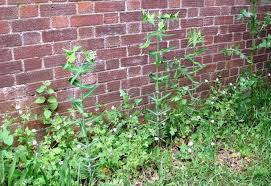
WeedyHero plants patch

WeedyHero plants patch

Weedy Areas: Weeds are no longer weeds it’s official they are hero plants, and so they are, if you can prevent it becoming a mono culture of something rampant. It is all about specie rich weed areas. Ivy that flowers in the winter months with pollen for the ivy bee and hover flies. Early lawn daises and dandelions for spring pollinators. Nettles for butterflies. It doesn’t mean no work, if  you let it go it will be the thug that hogs the space, so edit out as needed so there is lots of different hero plants. Not only is this a wonderful food source for lots of different wildlife, it will also be a good habitat for small mammals, amphibians and reptiles, so spare a bit of space round the shed or at the bottom of the garden for a wildlife rich weed patch, sorry I mean hero patch.

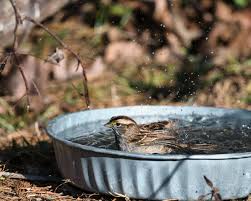
A small bowl pool can be used by many garden visits.

A small bowl pool can be used by many garden visits.

Water: We all know a pond is a fantastic addition to a garden for wildlife, particularly if it has sloping sides and different water levels. But not everyone has room for a pond. But you can add water, even if just seasonally. So even a washing up bowl, sunk into the edge of planting and a grassy area can provide water for birds to drink or wash in, water for mammals and a breading ground for many insects that have their lava stage in water. If it has vertical sides and is deeper than a washing up bowl, then create a rescue ramp with a small branch dipping into the bowl, so wildlife can climb out. Or you can go more natural and make a garden sized scrap. Literally dig a shallow area, where water will collect, say 350/400mm deep with shallow sides, line it if you wish to have water all year round, otherwise it will be seasonal, plant round the edges, add sticks and logs nearby and allow grass to grow longer round the edges. This will be a great extra habitat in your garden.

patches of bare earth are essential habitat in the wildlife garden.

patches of bare earth are essential habitat in the wildlife garden.

Bare earth and stone piles: Don’t panic, it need not be huge and we all dig up stones of varying sizes while planting and gardening, particularly if your garden is part of a new build development. So pile them up on a bare earth spot, a sunny spot is good, this stone pile will heat up and be a wonderful habitat for cold blooded reptiles like slow warms, other lizards and grass snakes and if you are super lucky adders. Old roofing tiles and even better a bit of metal roofing are even better as a snake shelter. The bare earth is great for different varieties of insects particularly the tawny and ashy mining bee.

 longer grass.

longer grass.

Grass of different lengths: Everyone still seems obsessed with meadows, and yes that is good. But really it is all about having different lengths of grass, and you don’t need a big area to accomplish this. Let the lawn where it edges the hedge grow to dandelion height and mow every 6 to 8 weeks. Allow the grass by the shed to get up to full height and cut in mid September and leave piles of grass over the winter as habitat and remove in March, for more information see ‘No Mow May’ blog May 2024, Even that close cut grass of your main lawn has habitat value, but cut it one height higher this year, good for the wildlife and it makes your lawn less likely to dry out in draught conditions and quicker to recover.

I hope I have inspired you to let a bit of the garden go! And see garden debris as habitat material instead. Happy wildlife gardening!


A scented Shrub for every Season

 Flowering scented shrubs

Flowering scented shrubs

Scent is the extra element in garden, scented planting can completely delight. For the best results, site scented shrubs in, enclosed spaces and near to paths where the scent can flood over the passer by. Here are a selection of shrubs that flower and produce scent through all four seasons.

Winter: There are a large number of winter flowering shrubs and most are scented. See the Scented Winter Garden Blog of February 2016.

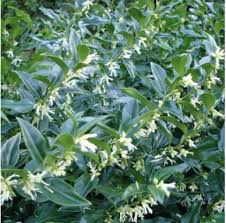
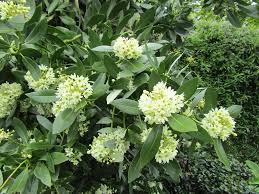
 Sarcococca confusa

Sarcococca confusa

Sarcococca confusa: A small evergreen shrub with small glossy dark green leaves, with a spreading habit. Tiny clusters of white flowers are produced along the stem and flower from January to February, with a very strong scent. Grow in a humus rich soil in semi-shade.

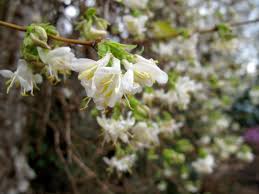
 Lonicera x purpusii 'Winter Beauty'

Lonicera x purpusii ‘Winter Beauty’

Lonicera x purpusii ‘Winter Beauty’: A medium sized shrub up to 2/2.5m, it is not the ‘prettiest’ shrub on the block, but the scent is worth it’s place I the garden. It has a sprawling habit with crossing branches, a semi-evergreen shrub, with mid -green leaves. Flower buds form on bare stems, in late December through to early February, with clusters of white/cream highly scented flowers. Grow on any good free draining soil in sun or a little shade.

Spring: Brings a whole plethora of scented shrubs, you are spoilt for choice.

 Daphne pontica

Daphne pontica

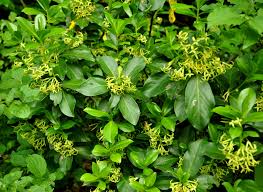
Daphne pontica: A small rounded evergreen shrub, with clusters of spidery yellow-green flowers produced April into May, which are deliciously fragrant in the evenings. Tolerant of poor soil and shade.

Viburnum carlesii

Viburnum carlesii


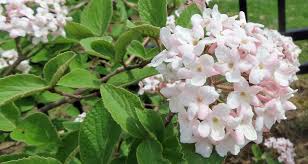
Viburnum cariesii: A wonderful medium sized shrub up to 2.5m, with grey green leaves and large waxy round headed white/blush coloured flowers which are highly scented and in flower from April into May. Good free draining soil in full sun.

Summer: There are the usual candidates, Lavender and Roses, but there are other shrubs toconsider that pack a serious scented punch.

 Philadelphus 'Beauclerk'

Philadelphus ‘Beauclerk’

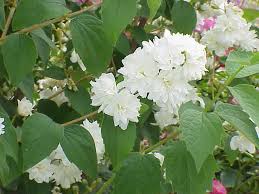
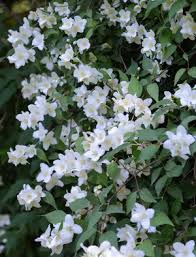
Philadelphus ‘Beau Clerk’: Large shrub with a arching habit 2.5/3m in height. With large single white flowers with a cerise splash basal markings, sweetly scented, produced June to July. Full sun good free draining soil.

 Syinga meyeri 'Palibia'

Syinga meyeri ‘Palibia’

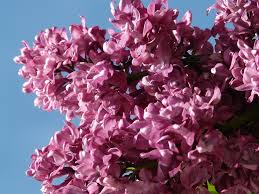
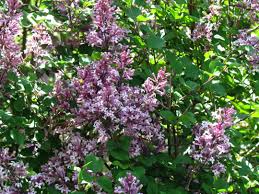
Syinga meyeri ‘Palibin’: A lovely Lilac for a small garden, a small to medium sized shrub with a dense habit. With a mass of panicles of mauve to soft rose pink highly scented flowers produced in late May to June. Full sun good garden soil.

Autumn: A fewer number of choices but there are still scented shrubs to bring fragrance into your garden as the days shorten.

 Viburnum x bondatense 'Charles Lamont'

Viburnum x bondatense ‘Charles Lamont’

Viburnum x bondnatense ‘Charles Lamont’ : An upright shrub to 2.5m, with tall stems and mid-green leaves. The bare stems start to bud up with clusters of pink flowers which open in November with a strong delicious scent. Good soil sun or semi-shade.

 Mahonia eurybracteata Subso. ganpinensis 'Soft Caress'

Mahonia eurybracteata Subso. ganpinensis ‘Soft Caress’

Mahonia eurybracteata subso.ganpinensis’Soft Caress’: Yes it is a little bit of a mouthful of a name  but this Mahonia, has all the scent of larger varieties but without the spiny leaves. It makes a small neat evergreen mounded shrub up to 1/1.3m and has delicate thin leaflets, with a mass of flower spikes of yellow fragrant flowers, produced in October and November. Grow in humus rich soil in sun or part shade.

All of these shrubs would be a wonderful addition to your garden planting, I hope I have inspired you to think more about scent in your garden.

If you want help creating a scented boarder or garden, then I know just the woman to help you, give me Emily a ring on 01273 470753 and I can help you design your new scented planting.

Winter Bedding Containers- Making a winter splash of colour!

 A large winter bedding display

A large winter bedding display

A container planted with a selection of winter bedding and good foliage colour can really lift the winter blues. The planting can add a welcome splash of colour. Whether by the front door as a welcome to your home or at the back door to cheer you after a muddy dog walk or near the garage of shed as you head to and from the car or to get to the logs, winter containers are a mini garden of colour that are well worth having in the depths of winter.

A container to celebrate, shades of red.

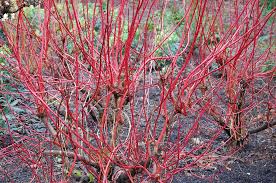
 Cornus alba 'Sibirica'

Cornus alba ‘Sibirica’

Cornus alba ‘Sibirica’ This wonderful cornus is all about the beautiful rich red winter stems. Either plant a small plant or Cut stems from an existing plant somewhere else in the garden. These cut stems can be the back bone of your winter display. Cut to short lengths to add through the planting or group together in a tall stand, to add height and extra wow factor.

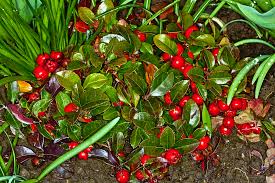
 Gaultheria prcumbens

Gaultheria prcumbens

Gautheria procumbens:  Is a main stay of winter displays. A small compact shrub with glossy dark green evergreen leaves, small white flowers in the summer give way to large marble sized bright red berries held through the winter months. Perfect towards the front of your container. Acid loving.

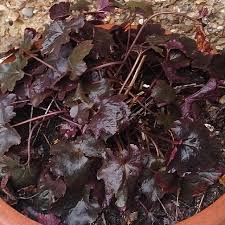
 Heuchera 'Chocolate Ruffles'

Heuchera ‘Chocolate Ruffles’

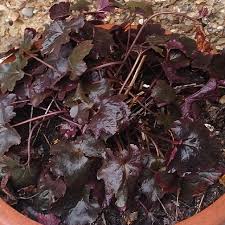
Heuchera ‘Chocolate Ruffles’: A superb foliage plant and a must for a winter container. Mound forming evergreen perennial with dark purple wavery edged leaves , stems of small creamy white flowers in the spring. A good plant for the middle of the container.

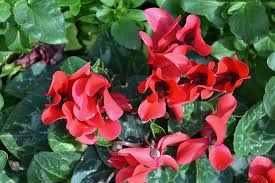
 Cycleman persicum 'Rouge Ecarlate'

Cycleman persicum ‘Rouge Ecarlate’

Cyclamen persicum ‘Rouge Ecarlate’: This a stunning small flowered bedding cyclamen flowering well from Autumn to mid winter, as long as there are not hard frosts, so a more sheltered spot would be best. Clumps of beautiful silvery patterned leaves and delicate clumps of brilliant red flowers, perfect for the front of the winter container in a small group, to tie all the shades of red together. Dead head regularly.

A winter container with shades of yellow.

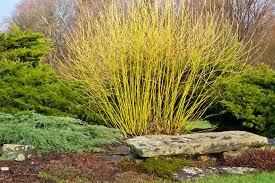
 Cornus stolonifera 'Flaviramea'

Cornus stolonifera ‘Flaviramea’

Cornus stolonifera ‘Flairamea’: A wonderful bright yellow sulphur green stemmed cornus. A small plant can be planted to fill the container for a couple of winters only before it becomes to large for it’s position in the container. Or you can cut use cut stems to create a central feature of different heights in the container or as a tall back drop statement.

 Skimma japonica 'Kew Green;

Skimma japonica ‘Kew Green;

Skimma japonica ‘Kew Green’: This is a brilliant winter flowering shrub with a domed compact habit, it will in time get to large for a mixed planted winter pot, unless it is a solo star in it’s own pot. But it should be alright for a few years. Glossy mid green evergreen foliage and a mass of upright flower stems held through the winter in tight green white buds opening towards the end of winter early spring with a mass of very highly scented flowers. A complete must for the winter display. Acid soil that is humus rich.

 Heuchera cylindrica 'GreenFinch'

Heuchera cylindrica ‘GreenFinch’

Heuchera cylindrica ‘Greenfinch”: This is a striking taller heuchera with clumps of evergreen ruffled leaves in a acid sulphur green with hints of yellow. Small flowers of white follow in the spring. A wonderful addition to the middle of the container.

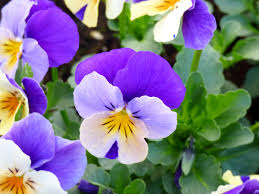
 Viola grandissimo 'Icy Blue'

Viola grandissimo ‘Icy Blue’

Viola grandissimo ‘Icy Blue’: A wonderful free flowing winter pansy with delicate soft yellow face with light mauve edging. Dead head regularly to keep the flowering going. The flowers will be a bit shy in the coldest blasts of the winter but will come back when the English damp winter reappears. Plant at the front of the container to flop over the edge and link with all the different foliage colours.

 winter container planting

winter container planting

Top tips: Decide where to site your container to make the most impacted and to be seen the most. It should be in full sun and a bit of shelter from the blasting winter winds if possible, if cyclamen are a feature or you are using a lot of winter flowering pansies then a little protection from the worst of the frost would be good, slightly under the house overhang or near a wall etc. Make sure it is large enough for the plants to grow through one winter season and even up to 3 with the shrubs. The pot/container must have good drainage holes and add crocks to the bottom to help with the drainage. The compost mix should be peat free. If you are planting Gutheria or Skimma then the compost must be for Ericaous plants ( acid loving) all the other plants I have suggested will do well in any good multi-purpose compost. After a few years the shrubs may well need re-homing in a flower bed in the garden as they will become to large for a container, but depending on the container size and the size of the plants to start with you should get a few years from them as ‘winter container stars’

I hope I have inspired you to get cracking with creating your winter display. Enjoy!


Fabulous purple foliage

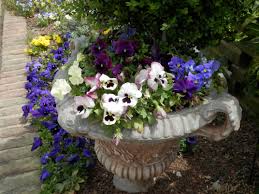
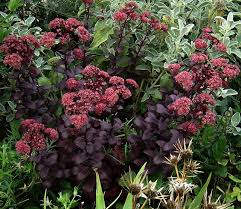
Purple foliage plants making a splash in a mixed planting scheme.

Purple foliage plants making a splash in a mixed planting scheme.

Foliage doesn’t have to all be about the many shades of green. There are other foliage colours that  can pack a punch and baring in mind that plant leaves are what we all spend most of our time looking at, it needs to be fabulous. Bring on the deep purple and burgundy. Here are some star turns to consider.

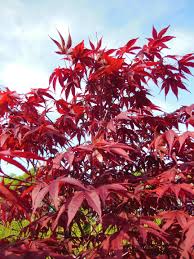
 Acer palmatum 'Atropurpureum'

Acer palmatum ‘Atropurpureum’

Acer palmatum ‘Atropurpureum’: This slow growing Acer is worth the wait. With a wide spreading habit and delicate small palmate leaves of a deep purple,  which turn dark red in autumn. It makes a  great choice for a lawn specimen tree. Height 4m spread 2.5 to 3m. Semi-shade and on humus rich acidic to neutral soil that dose not water log. Not full sun.

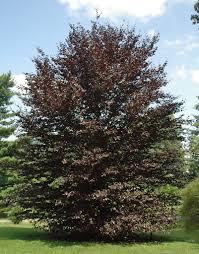
Fagus sylvatica 'Riversii'

Fagus sylvatica ‘Riversii’

Fagus syvatica ‘Atropurpureum’: This is the big daddy of  purple foliage plants, the copper beach is a large and majestic tree.  This variety is probably the deepest purple of then all. It should be planted as a specimen tree and focal point. It can also be grown as a hedge, either as a complete copper beech hedge or as a ‘tapestry’  hedge where blocks of copper beech are mixed in with a normal green beech hedge. Grows on all free draining soils to even quite thin chalk soils, in full sun.

 Phormium 'Thumbellina'

Phormium ‘Thumbellina’

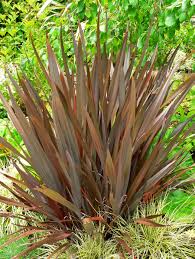
Phormium tenex ‘Thumbelina’ : This is a wonderful small variety growing to less than a meter.  With soft arching foliage of thin leaves in a deep dark purple, almost black.  This evergreen shrub adds a  dramatic focal plant for any planting. Full sun and most soils, dose not like wet soils.

Pottosporum tenuifolium 'Tom Thumb'

Pottosporum tenuifolium ‘Tom Thumb’

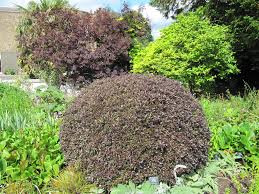
Pittosporum tenifolium ‘Tom Thumb’: This is a versatile shrub, marvellous as a full stop to the corner of planting beds and as a low evergreen hedge. A dense rounded habit growing to about 70cm tall, higher if allowed. With small very rich purple leaves, which open as lime green and slowly darken to purple over the growing season.

 Cotinus coggygria 'Royal Purple'

Cotinus coggygria ‘Royal Purple’

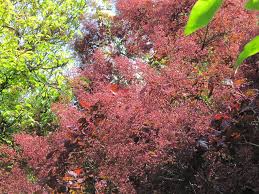
Cotinus coggygria ‘Royal Purple’: Is a large shrub with a slightly straggling habit, which can look untidy, if not kept in check, but its hansom foliage and striking flowers more than make up for this. Rounded leaves of purple, that go a rich red in the autumn. Misty masses of tiny pink flowers are produced June to July, giving the shrub it’s common name of ‘Smoke’ Bush. This really is a fabulous addition to the back of a large planting.

Vitis vinifera 'Purpurea'

Vitis vinifera ‘Purpurea’

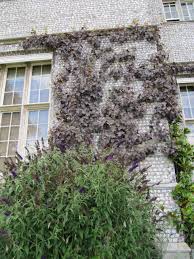
Vitis vinifera ‘Purpurea’: This purple leafed vine is a show stopper. It is less vigorous than it’s green cousin and to be honest the grapes are not anything to write home about. But the colour is fabulous and planted with a climbing partner like Clematis montana, it makes a striking statement. Grow on free draining soil in full sun.

 Heuchera 'Chocolate Ruffles'

Heuchera ‘Chocolate Ruffles’

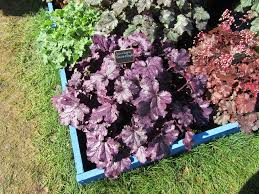
Hechera ‘Chocolate Ruffles’: There are many different varieties of heuchera and most are purple or burgundy, but this one has  particularly  dark foliage. A taller variety with a more upright habit. At about 35/40cm tall. With  evergreen palmate leaves with crinkly edges. Small dark purple flowers are produced on thin purple stems in mid -spring.  A must for the edge of a boarder.

combining different purple leaf shades can creat a dramatic planting.

combining different purple leaf shades can create a dramatic planting.

Top Tips: Don’t go mad, and have every plant with purple foliage otherwise they will merge together and loose their impact. For real drama consider sliver and purple foliage combinations, but think about the growing conditions. Purple/burgundy foliage and magenta pink is a very good combination. As is apricot and golden yellow with burgundy/purple foliage.

I hope you are feeling inspired to lift the foliage pallet of you garden with some splashes of purple foliage.


Lilies and Gladioli-The drama queens of the high summer garden.

 Lilles planted in the garden, for maximum impact.

Liles planted in the garden, for maximum impact.

These two late flowering bulbs and corms, can add a splash of colour after earlier spring flowering plants are over and they can be used as under planting so they grow through other plants. With scent and razzmatazz they are more than just cut flowers, there are varieties that can work well in mixed planting and make your late summer garden sing. Here are some to try.

 Lilium 'Casa B;anca'

Lilium ‘Casa B;anca’

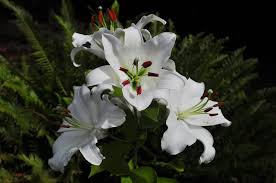
Lilium Casa Blanca: This is a reliable and wonderful  lily with large open white flowers on tall 1.30m stems with a powerful heady scent. July – August. Makes a superb cut flower.

 Gladiolus byzantinus

Gladiolus byzantinus

Gladiolus byzantinus: This late spring flowering ‘glady’ has a more delicate look than the later summer ‘cutting flower’ varieties. Tall dusky dark green foliage with flower spikes up to 60cm tall, of deep purple. Wonderful in a mixed planting with purple Alliums.

 Lilium 'Stargazer'

Lilium ‘Stargazer’

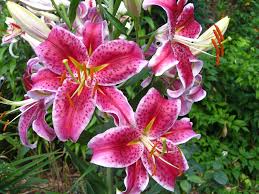
Lilium Stargazer: This is a classic lily with lots of wow facture open star like flowers in maroon and pink, with dark spots along the petals and with tipped edges. With a sweet scent added for good measure. At 90cm high good for a mid-boarder position. Flowering July-August.

 Gladiolus colvillei 'The Bride'

Gladiolus colvillei ‘The Bride’

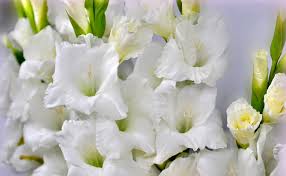
Gladiolus colvillei The Bride: An elegant selection of pure white flowers opening up a stem to 50cm in height. Flowering in July.

 Lilium 'Sunny Morning'

Lilium ‘Sunny Morning’

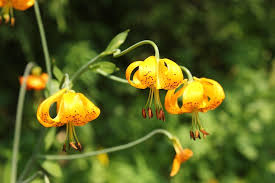
Lilium Sunny Morning: These hybrids are often called turk-cap lilies With a display of flowers produced along the stem and and often opening in supersession. A tall selection at 1-1.5m in height with a mass of orange-yellow flowers. The petals curl back under to reveal the spotted base of the petals and bright orange stamens. Flowering June -July

Sadly there is no free from copyright image to illustrate this plant.

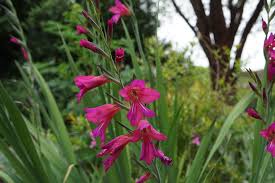
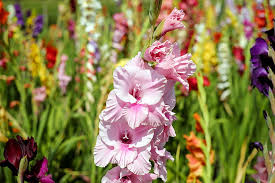
Gladiolus narus Elvira: This is a dramatic ‘glady’ with tall flower stems up to 75cm in height. Pale pink flowers with red base blotches and soft yellow stamens. Packs a late flowering punch in August.

A mix of colourful Gladiolus

A mix of colourful Gladiolus

Top Tips: Both Gladiolus and Lilium, need  a good sunny spot on free draining soil. They do well  in poor soils. Do not allow to get water logged. Unfortunately slugs and snails love lilies in particular so watch out for signs of attract from early spring onwards. Also  lily beetle is on the increase and is now wide spread across southern counties. So look out for the beautiful shiny red beetled adults, laying eggs on the lily stems in early summer. It is the hatched young that cause the damage. Turning the stems and leaves into mushy mess. Contact your local garden centre or plant nursery for advise on both chemical and organic control measures for both of these common garden pest.

I hope I have inspired you to add both these late flowering  ‘Drama Queens’  to your garden planting scheme.

No Mow May-Let the Lawn Go!

Mowing a lawn

Mowing a lawn

The Royal Horticultural  Society have started a campaign in recent years, to encourage people not to mow their lawns in May. Doing away with the weekly cut for one month in spring and letting the grass grow to create a better grass habitat for invertebrates, insects. This is a lordable campaign to get us all to think about our gardens more as wildlife habitats and less as ornamental outdoor spaces for just our needs,

 A traditional striped cut lawn

A traditional striped cut lawn

One of the best wildlife habitats our gardens have to offer is grass and we can all do our bit to help create a variety of lawn habitats in very simple ways even in the smallest garden. Lots of people seem to assume the default best and  only thing to do is to either not cut your lawn at all or to rip it all out to create a wild flower meadow. The latter being really quite difficult to achieve.

 A flowering meadow

A flowering meadow

But this is not so, the best way to create as many different grass habits to suit as wider range of different insects as possible; is to have areas of grass, cut to different heights throughout the mowing season and going  into the autumn and winter months.

 Spring bulbs planted in a lawn

Spring bulbs planted in a lawn

From your neat family lawn, cut every 1 to 2 weeks, ready for ball games and family picnics, to areas of grass that have spring bulbs and grow long till June. To fuzzy fringes of grass that are cut every 4 to 6 weeks to the knee high meadow you strim in August. Creating different mowing regimes and different habitats.

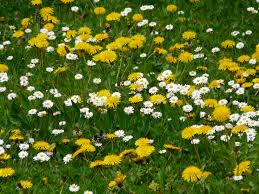
 Daisies and dandelions in a lawn

Daisies and dandelions in a lawn

So even if you only have one lawn, can you decide on a sweeping shape at one end that you will only cut every 4 to 6 weeks on high, so it is always ‘daisy’ length. Allowing what traditionally were considered lawn ‘weeds’ to flower  makes valuable insect food and your sterile green lawn will now have a sweep of colour that will be buzzing with life,

 Bee on a dandelion

Bee on a dandelion

A round the edges of the lawn, or under the canopies of less dense trees, consider adding spring flowering bulbs, the same space can take you though from January with crocus and snowdrops, with Daffodils and Narcissi, from early to late spring. See the September 2018 blog about nationalising bulbs. Not only will this give you a slash of colour, it will be a valuable food source for insects, but the longer grass will also act as a different habitat. Either you can cut the grass at the end of June once the bulbs have died down and then continue with a 4 to 6 week cutting or you can let the area grow long and cut down in early autumn.

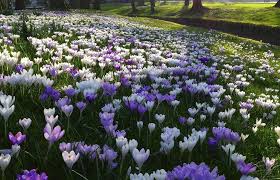
 Crocus late winter in a lawn

Crocus late winter in a lawn

If  you have grass garden paths, then cut them about every 3 weeks and on a higher cut than the     main lawn, as the wear will be intensified over the narrower area, making for a greener path and yet another different grass habitat.

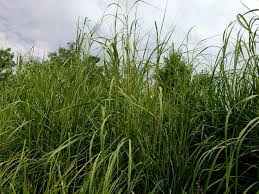
 A long grass lawn

A long grass lawn

If you do have space in the more wild and woolly edges of your garden to let a strip of grass  grow up to meadow height, this will be an invaluable habitat. You don’t need to go to the effort and expense of making a ‘wildflower meadow’. Just allow your existing grass sword to grow. Other plants from cowpalsy to docks and nettles will appear, all are valuable food souses for a range of insects. The trick is to manage things, particularly if it is a small space as some of these plants can be very invasive and over 2 or 3 years you may find you have a monoculture. So weed out by pulling as needed. For larger areas mown paths will lead the way though your meadow so you can get up close to the insect life. At the end of August, beginning of September, Strim down the meadow, you may want to leave some woodier plants up like docks through the winter. Gather the grass into stripes for about 3 weeks. Remove most of the grass piles so the grass dose not die under nether, but leave the odd pile of grass staked through the winter months till mid February as an over wintering habitat for various insects. Remove late February to make way for the new season grass growth.

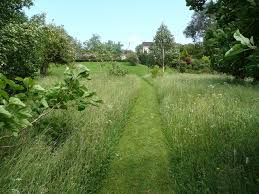
 Mown paths through a meadow.

Mown paths through a meadow.

I hope I have inspired you to look again at your lawn and gassy spaces in your garden and that you will decide to create different grass habitats, after all it means less mowing, so it is win win for you and the insects.


The Garden Harvest.

 Autumn Harvest

Autumn Harvest

October heralds the garden harvest, when all your hard labours in the fruit and vegetable garden are now realised. It often also produces a glut of produce and once you have exhausted all your family and friends with ‘food parcels’, the next thing to do is get preserving so all this tasty home produce can be enjoyed through the winter months ahead. Here are a few ideas.
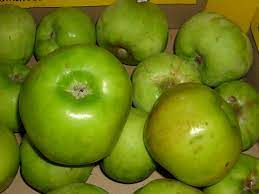
Apple Bramley's Seedling

Apple Bramley’s Seedling

Apple Bramley’s Seedling: The classic cooker, found in many gardens, needs 2 pollinators, crops November to March. Large fruits with crisp juicy flavour.
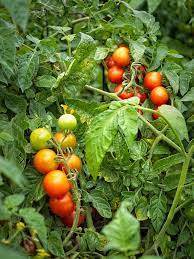
Tomato 'Gardener' Delight'

Tomato ‘Gardener’ Delight’

Tomato Gardener’s Delight: A well know variety that is an easy to grow cane fruit, with medium sized red salad tomatoes.

Green Tomato and Apple Chutney: A classic chutneys and prefect for glut crop

Recipe: 900g/2lb Cooking apples, peeled, cored and remove all bruised and damaged areas. Rough chopped.

15ml/1tbsp: mustard seed, 900g/2lb, green tomatoes rough chopped.

350gms/ 12oz Onions, skinned and rough chopped. 1Garlic clove, skinned and finely chopped.

225g/8oz Sultans. 350G/12ozs demerara sugar. 25ml/5tsp curry powder. 5ml/1tsp cayenne pepper.

20ml/4tsp salt. 900ml/1 ¼ pints malt vinegar.

  • Using a large preserving pan. Put the apples in with ½ pint of water and cook till tender.
  • Add all the other ingredients and stir well until the sugar has dissolved.
  • Heat gently for about 3 hrs, stirring occasionally, to prevent sticking, until most of the liquid has gone and the chutney is a soft brown colour.
  • Prepare sterilised jars, warm ready, pot the chutney will still hot, and cover in the usual way with waxed discs (wax surface down).
  • Label and store. Tip: due to the vinegar in chutney, metal jar lids will go rusty, so use plastic lids or just the cellophane covers.

 Blackberry Lochness

Blackberry Lochness

Blackberry Loch Ness: Thornless variety which is a reliable cropper. With large berries.

Blackberry cheese: cheeses became very popular in Elizabethan times it is like a very solid jam that can be stored in an open dish and be cut into sliced or squares to be enjoyed on crackers or toast.

Recipe:  900g/2lbs Blackberries, ripe and undamaged. 450G/1b cooking apples, peeled cored and rough chopped.  Sugar ( quantity depends on the weight of the fruit puree)

  • Put all the fruit into a large persevering pan with 1 pint of water and cook for about 30 mins until fruit is tender.
  • Now spoon the fruit into a large sieve and press through with a wooden spoon. Measure the puree. For every 600ml/1 pint of puree add 350g/12oz of sugar.
  • Heat gently stirring the sugar until dissolved., bring to the boil cook until the mixture becomes thick and the wooden spoon leaves a clean line when drawn through the mixture.
  • All need to be sterilized. Either put in jars or shallow dishes and cover in the normal way or the cheese can be put into small moulds, so the cheese can be set and then turned out and served whole.
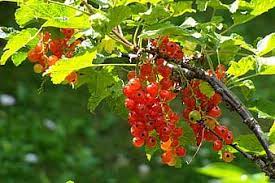
 Redcurrent 'Red Lake'

Redcurrent ‘Red Lake’

Red current Red Lake: Mid -season current with bright red fruit and a heavy cropper.

Raspberry 'Malling Jewel'

Raspberry ‘Malling Jewel’

Raspberry Malling Jewel: Main crop, firm good flavoured fruit perfect for freezing and persevering.

Summer fruits in Vodka: There is nothing like experimenting with flavours by adding  fruit flavours to your favourite spirits. They also make great Christmas gifts as the fruit will have infused after a few months.

Recipe: 450gs/1lb of mixed soft fruit, red currents, raspberries, loganberries. All stems and leaves removed and any damaged fruit. 17g/6oz caster sugar. Vodka

  • Thoroughly clean a large glazed stone ware jar, with firm lid and which can fit a saucer inside it.
  • Toss the fruit in the sugar until completely covered and leave for 2 hrs.
  • Layer the fruit into the jar, then pour in enough vodka to completely cover the fruit.
  • Place the saucer on top of the fruit to keep it completely submerged. Now cover with a layer of tight cling film. Add the lid and store in a cool dry place.
  • Every week or so stir the mixture to make sure the sugar and vodka are fully mixed. Make sure you cover well.
  • Label and store for at least 1 month before using, the longer you can hold off the better the flavour. The fruits can be eaten with ice cream or cream and the fruit vodka will be like a liqueur.
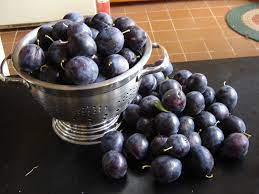
 Damson Farleigh

Damson Farleigh

Damson Farleigh: Also know as the Crittenden Damson, The earliest Damson to crop. No need for a pollinator. Good flavoured black fruit with green juicy flesh.

Damson Jam: This is a beautifully flavoured jam and well worth making as it is not available in shops.

Recipe: 2.3kg/5lbs wash and undamaged and ripe Damsons. 2.7kg/6bls sugar. A knob of butter.

1) Put the fruit in a preserving pan with 900ml/1.1/2 pints of water. simmer until the fruit is soft and pulpy.

2) Remove the pan from the heat and stir in the sugar until dissolved. Add the butter.

3) Put back on the heat and boil. Using a slot spoon, remove the stones as they come to                   the  surface.

4) Continue to boil until setting point is reached.

5) Remove any scum from surface with slot spoon, pot and cover in the usual way.
 Damson Farleigh

Crab Apple John Downie

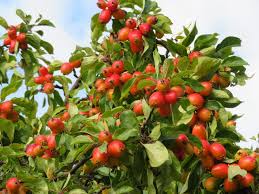
Crab-Apple John Downie: A large showy crab-apple with upright habit. White blossom and in September large conical yellow flushed red fleshy fruit, full of flavour.

Crab- Apple Jelly: Jellys are beautiful with their clear colour and full flavour. Either used with roast meets, traditionally Lamb or cold meats or as a less sweet treat on scones.

Recipe: 2.5kg/5.1/2 lbs washed undamaged crab-apples all stalks and leaves removed. 6 cloves. Sugar ( depending on quantity of jelly)

1) Rough crop the crab -apples ( do not peel or core!). Put in preserving pan with 1.7L/3 pints of water. Bring to boil. Simmer for about 1.5hrs. Until fruit soft and pulpy. Stir to stop sticking. Add a little more water if needed.

2) Spoon the fruit into a jelly bag. Turn a short stall upside down. Attach the jelly cloth to the 4 legs and  leave to drain into a large bowl. ( over night is good.)

3) Once all the liquid has drained through the bag, discard the pulp.

4)  Measure the liquid. For every 600L/1 pint of liquid add 450g/1lb of sugar. Return to pan and heat gently.

5)  Stir to prevent from sticking and bring to the boil, boil until setting point is reached.

6) Remove any scum and pot and cover in the usual way.

 Enjoying Homemade Jam

Enjoying Homemade Jam

Top Tip: for all preserving, use ripe ( depending on the recipe) and most importantly undamaged fruit. Good equipment; a jam thermometer is a must. All jars and bottles need to be clean and then sterilized . Make sure all tops and lids are also sterilized. For jams, jellies, chutneys and relishes make sure you have wax discs and cellophane tops and rubber bands. NB the waxed side of the disc is what goes against the jam/chutney surface. A pack of labels with date made and in Chutney case a date it can  be eaten ( All chutneys need about 3 months to mellow before eating, so one made in October will be perfect for the cold ham and turkey on boxing day!)
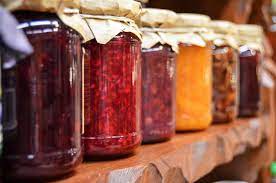
 Stored jams, preserves, chutneys and pickles from the garden harvest

Stored jams, preserves, chutneys and pickles from the garden harvest

I hope I have inspired you to get cracking with preserving your crops or even to get planting some fruit so you can  have home made, jams, jellies, fruit spirits and liqueurs and chutneys and relishes on tap. So even in the depths of winter you can still enjoy the abundance of summer.

Enjoy !
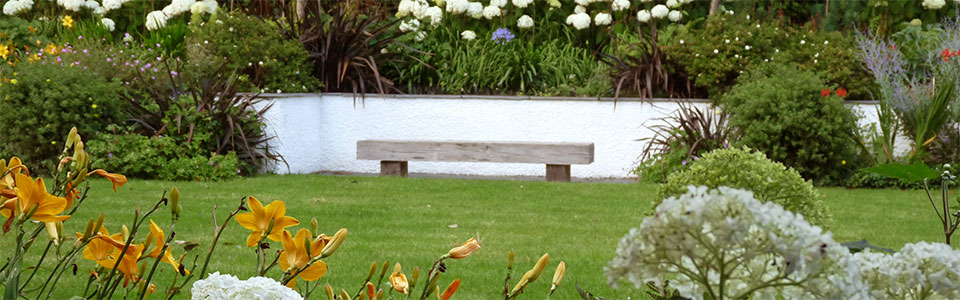
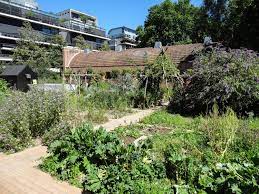
The Potager- Ornamental Vegetable and Herb Garden.


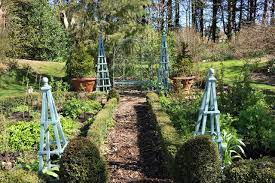
 A Potager Garden

A Potager Garden

The Potager garden was originally designed by medieval French monks, but its hay day was in the 16Cth. When no french garden would be complete with out one. A potager is an ornamental vegetable, fruit and herb garden. With symmetrical and geometric patterned flower beds, intersected by narrow paths. The fruit and vegetables are as ornamental as possible but also edible and planted in groups and in decretive patterns.

Here are some varieties to get you started on the design of your potager.

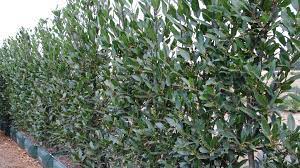
 Laurus nobilis as a clipped hedge.

Laurus nobilis as a clipped hedge.

Laurus nobilis- bay, in fact a large evergreen tree. But it can be chipped and trained into many topiary shapes from, cones, squares and lolly-pops. These trimmed trees will add structure to your Potager garden even in the winter months. You can add an extra dimension by training your lolly-pop standards to have twisted trunks. The leaves are used to flavour sauces and meat dishes particularly in Italian cookery. A must to define the axis’s of your design.

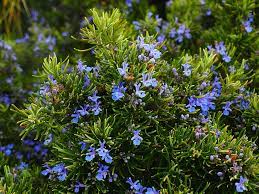
Rosmarinus officinallis 'Miss Jessopp's Upright'

Rosmarinus officinallis ‘Miss Jessopp’s Upright’

Rosmarinus officinallis ‘Miss Jessopp’s Upright’: although Rosemary has in fact been re-classified as a Salvia, I think it is still best known as Rosmarinus and all nurseries will know what you are asking for. This is a lovely variety of the evergreen shrub with a small compact habit and upright stems, making it perfect as a low hedge to edge the vegetable beds of the Potager. The aromatic leaves are used in both savory and sweet dishes and to scent clothes draws. The flowers are also edible.

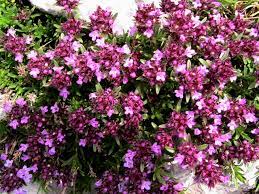
 Thymus serphyllum 'Russetings'

Thymus serphyllum ‘Russetings’

Thymus serphllum ‘Russetings’ : A wonderful evergreen low creeping thyme, which will grow in the cracks of the paths or run around under standards like gooseberries and bay trees. With a mass of pretty small purple flowers much loved by insects from mid summer. It has the added advantage of being a mainstay of the culinary herbs being just widely in the recipes of many cuisines.

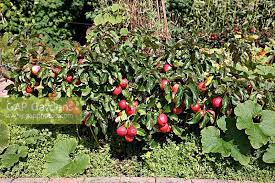
 Apple saturn 'Stepover'

Apple saturn ‘Stepover’

Apple Saturn ‘Stepover’ : grown on the most dwarfing stock, M27, these apples have been developed to grow low to the ground almost like a horizontal cordon, so you can step over them as the name suggests. A wonderful talking point to edge the main path. This variety is self-fertile, has good disease resistance and is a superb apple, with a strong flavour and a crisp flesh which is very juicy. Pick October and keeps to January. Surely a must for you Potager.

 Rainbow chard cut & come again

Rainbow chard cut & come again

Rainbow Chard: This is a wonderful vegetable which can be harvested for many months and particularly comes into it’s own in the autumn and winter when it has it’s main cropping season, just cut the stems and remove the tougher leaves but eat both stem and leaf. But it’s ornamental merit is what is attractive for the potager. It has vivid stems in white, cream, pink, red, orange and yellow. A stunning vegetable, that tastes good to.

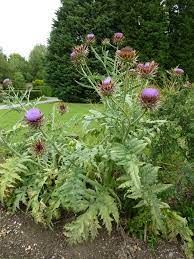
Cynara scolymus 'Gros Vert de Leon'-Globe artichoke

Cynara scolymus ‘Gros Vert de Leon’-Globe artichoke

Cynara scolymus ‘Grosvert de Lean’: This is a statuesque hardy variety of Globe Artichoke from France. It produces a great sword of sliver grey leaves and a a tall flower pick up to 2m tall. With tight round green buds which are very succulent and have a knock out taste are produced in late summer. If you miss the odd one or two in your harvest then they will open to reveal their beautiful blue thistle like flowers. Insects will love the flowers and birds the seeds.

 A potager garden

A potager garden

Top tips: The site for your Potager should be in full sun if possible a little shade from the odd tree over part of it is probably ok. But don’t forget it is all about symmetry so you want the same key plants to mirror in different parts of the garden then having the same light conditions through out will help. Also don’t forget that some flowers are also edible and this can increase the amount of colour in your potager garden. Marigold, Borage, violas and natstershams to name a few.

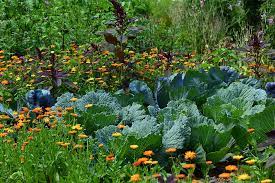
 The mixed planting of a Potager garden

The mixed planting of a Potager garden

I hope I have inspired you to have a go at creating your own Potager, if you don’t feel confident having a go your self, then I know just the woman who can help you, just give me Emily a ring on 01273 470753.

Don’t forget, in a Potage Garden the edibles are the stars not ornamental flowers.

Spiraea, Philadelphus and Weigela- Late Spring-Early Summer Shrubs

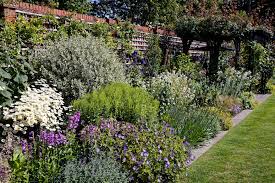
 Spring and Summer flowering shrubs

Spring and Summer flowering shrubs

Spiraea, Philadelphus and Weigela, could be considered to be the holy trinity of summer flowering shrubs, these are the back bone and structure to any good large boarder planting scheme. Often summer colour is thought of as roses and herbaceous planting and shrubs get over looked. But they have much to add when in and out of flower and no good planting scheme would be with out these three. Here are some varieties to consider.

 Philadelphus Belle Etoile

Philadelphus Belle Etoile

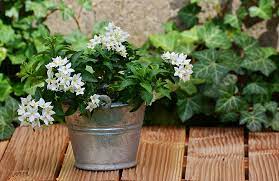
Philadelphus ‘Belle Etoile’: ‘mock orange’, it is all about the scent with Philadelphus, and this variety has to be amongst the best. A medium sized shrub with tall upright, arching growth, gives a statuesque feel to the boarder. Mid green leaves and wide open white flowers flushed with a  maroon centre. Flowering June to July. Sun part shade.

 Pheladelphus Manteau d' Hermine

Pheladelphus Manteau d’ Hermine

Phiadelphus ‘Manteau d’ Hermine’: A compact variety producing a neat mound of low growth with fresh green leaves. Long lasting sweetly scented flowers June into July. Will grow in any reasonable soil with good drainage, they do not like being water logged.

Spiraea Arguta

Spiraea Arguta

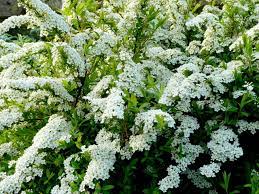
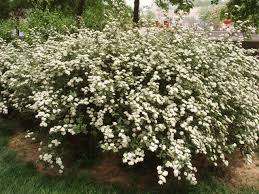
Spiraea aruguta: ‘ Bridal wreath’, this is a truly spectacular late spring early summer shrub, when in full flower. A mound forming medium sized shrub with long arching branches, it really must be given it’s head and allowed to fully develop its habit, which is graceful and eye stopping, but sadly to often is hacked into submission. Small clusters of white flowers produced in profusion line the branches from April to May. Followed by small mid-green leaves. Sun or a little shade.

 Spiraea japonica 'Candle Light'

Spiraea japonica ‘Candle Light’

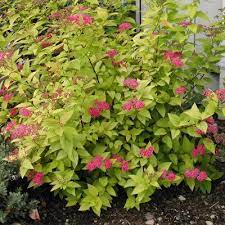
Spirea japonica ‘Candle Light’: This is a small compact growing Spiraea ideal for the small garden or flower bed. With a compact dense habit and small bushy soft yellow leaves that mature into a strong yellow. Flat heads of soft pink flowers are produced from July to August. Sun or a little shade. These tough  shrubs will put up with a lot of different soil conditions but not water logging.

 Weigela florida 'Foliis Purpureis'

Weigela florida ‘Foliis Purpureis’

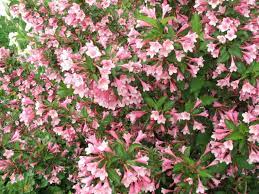
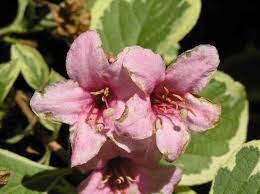
Weigela florida ‘Foliis Purpureis’: A small to medium shrub which is slow growing with a dense compact habit. With grey-purplish leaves which act as a stunning foil for the pink trumpet like flowers produced in clusters from May to June. Grow in full sun although will tolerate a little shade. All good well drained soils.

 Weigela florida variegate

Weigela florida variegate

Weigela flordia varigata: Medium sized shrub with a dense habit. Leaves have a delicate variegation of creamy white edging to the leaves. Scented pink flowers in June. Best grown in dappled shade, so the variegated leaves do not get scorched.

 Spring shrubs can be wonderful in pots and containers

Spring shrubs can be wonderful in pots and containers

Tips: These three hardy shrubs will grow nearly anywhere. From good rich soil to thin chalk. They like good light levels and a sunny spot, but the yellow leaved and variegated forms of all three shrubs are prone to scorching in very hot sunny potions. Only prune if really needed, to reduce size or remove very old or diseases wood. If you have chosen the right shrub for the space it should not need to be pruned. If you do need to prune, then after flowering is the best time, to allow for regrowth and the development of next years flowers.

 All these beautiful shrubs, add a bold splash of colour to the late spring garden.

All these beautiful shrubs, add a bold splash of colour to the late spring garden.

I hope I have inspired you to take a fresh look at these under used shrubs, with their long flowering season, scent, spectacular flower displays and varied foliage colour. As well as the range of sizes. These shrubs really do deserve to be planted much more widely.

If you need help to revamp a planting area and to redesign a planting scheme, then I know just the woman to help you. Give me Emily a ring on 01273 470753, to discuss all your garden design needs.

Pretty in Pink

 A pink flower border

A pink flower border

The white garden and even now the hot garden and cool counter part, has been pretty much ‘done’ to death. So if you want to be in the vanguard of a new look, why not hit your dreamy feminine side, get all ‘Barbara Cartland’ and go ‘Pretty in Pink’.  Here are a few plants to get you started.

Hebe 'Great Orme'

Hebe ‘Great Orme’

Hebe ‘Great Orme’: A wonderful domed evergreen shrub up to 1.2/1.5m in size. With Swirls of long mid-green leaves and large dramatic spikes of bi-coloured flowers from rick pink to soft white. Mid summer. Any good free draining soil. Full sun.

 Syringa pubescens Subsp. microphylla 'Superba'

Syringa pubescens Subsp. microphylla ‘Superba’

Syringa pubescens subp. Microphylla ‘Superba: This is a lovely slowish growing compact Lilic. Getting to about 1.5m in height or a little taller. Small rounded mid green leaves. With small clustered mid pink flower clusters which are highly scented in June – July. Good soil full sun.

 Rosa 'Gertude Jekyll'

Rosa ‘Gertude Jekyll’

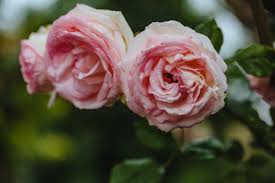
Rosa ‘Gertrude Jekyll’: This is a vigorous upright rose, produced by David Austin. Up to 2m, also can be used as a short climber for a fence or arch way. Good disease resistance. Eye popping shocking pink cupped flowers with strong scent produced from early summer up to the frosts. Good humus rich soil with good moisture retention. In full sun.

 Anemone hupehensis japonica 'Prinz Heinrich'

Anemone hupehensis japonica ‘Prinz Heinrich’

Anemone hupehensis japonica ‘Prinz Heinrich’: This is a great end of summer perennial that will just flower and flower. The huge advantage is it is shorter than most Anemones at 70cm and much better behaved, it is less likely to spread. Flowering from July to the first frosts with rich pink open flowers and golden stamens. Full sun or part shade. To even quite dense shade. Most soils.

 Bergenia 'Eroica'

Bergenia ‘Eroica’

Bergina ‘Eroica’:fabulous low growing ground cover perennial. Evergreen with rounded leathery leaves of mid green that go a superb wine red in the colder months. Flowers held on red stems are a eye shocking magenta with a black central eye. March/April. Good humus rich soil dappled shade.

 Salvia hemorosa 'Rosa Queen'

Salvia hemorosa ‘Rosa Queen’

Salvia nemorosa ‘Rose Queen: Clusters of base leaves in mid green and a mass of mid pink flower spikes produced from May to August, this perennial earns its keep. Height 45cm. Full sun well drained soil.

 Pretty in Pink !
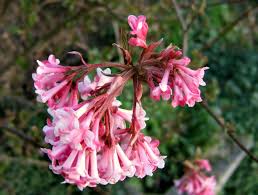
Pretty in Pink !
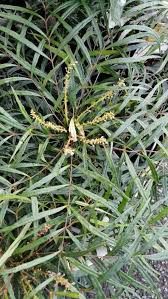
I hope I have inspired you to try something a little different, whether you decide on one particular shade of pink or mix it up, don’t forget shades of foliage and even pink new growth. Splashes of white can help to space the colours, you can go as mad or as restrained as your creative juices desire. Good Luck.

Don’t forget,if you want help creating an eye catching pink garden, I would be happy to help, just give me Emily a ring 01273 470753.